
By Dayne Hudson
THIS ARTICLE IS PART 3 of 3 - CLICK HERE FOR PART 1
HIGH GI CARBOHYDRATES AND SATIETY
The other claim by the IIFYM haters: high GI carbohydrates will leave you in a pool of a food craving mess.
The ealier study clearly shows that when the calories and macros are matched - whether it's a sugary McDonalds Bun or whole wheat bread - the outcome is the same.
But let's look even deeper into this.
As I've told you before the GI index is a completely misunderstood system - add fibre, protein and fats to a meal and the GI is lowered (10).
So avocado (fats) along with chicken (protein) and spinach (fibre) all would LOWER the GI of a white bun.
One study (11) examined seven "healthy" young men who ingested two of the same diets: 46-47% carbohydrates, 41% fat and 13-14% protein over 30 days.
One group consumed high GI carbs to make up their 46-47% and the other had low GI carbohydrates to make up the identical percentage.
To quote one interesting finding from the paper:
"Initially, blood glucose and plasma insulin concentrations were lower during part of the day with the low GI diet than with the high GI diet, but after 30 days of the diet this difference diminished."
Furthermore, there was no difference in the amount of consumption between both groups - meaning the high GI group DID NOT experience more cravings which people think will lead to the consumption of a greater volume of food.
I've also seen people turn their noses up at the idea of potatoes or white rice during diets because of the high GI index.
Well....truth be told, they SHOULD be eating them.
Why?
Because these foods are ranked as some of the BEST in preventing hunger; scoring high on the satiety index scale - much more important than the glycemic index (11).
But of course, we never hear as much about it.
But as I say to people - losing weight is all about the battle for satiety. When we're full we don't overeat - simple.
GI AND WEIGHT LOSS
Low GI foods have NOT been found to be superior than their than high GI types (12).
To quote from the above paper:
"In summary, lowering the glycemic load and glycemic index of weight reduction diets does not provide any added benefit to energy restriction in promoting weight loss..."
NO BINGE EATING - THE BIGGEST DRAWCARD
Anecdotally and scientifically, there's plenty of evidence of people stacking the weight back on after dieting.
They restrict themselves for 10-12 weeks eating nothing but "clean" foods, then literally cannot stop eating when their diet ends until they reach their starting weight again.
I've written about this before in my article "why diets don't work" - but essentially, this is due to a number of factors, including people's levels of leptin that are low and the "energy gap" due to the calorie deficit outlined in this reputable research paper (13).
At the end of a diet, your body does EVERYTHING it can to return to homeostasis - it’s most comfortable level of body fat.
You can keep leptin levels high on a flexible dieting program by enjoying the carbs you like, by implementing what I strongly recommend, the REFEED DAY - and enjoying the frowned upon foods to stay sane.
Then there's the research examining this eating approach amongst overweight subjects (14).
They were questioned about dietary restraint, overeating, depression and anxiety.
A word from the authors in regards to what they found:
"The strongest canonical correlation was the relationship between flexible dieting and the absence of overeating, lower body mass and lower levels of depression and anxiety."
Other research (15) has found that:
"Flexible control often is associated with successful weight loss".
BUT WHOLEFOODS CAN BURN MORE CALORIES
Now of course, there's heaps of benefits to eating "clean" foods. As I've mentioned, IIFYM doesn't involve brushing these foods; they are so vital.
To revisit my paragraph at the start of this article:
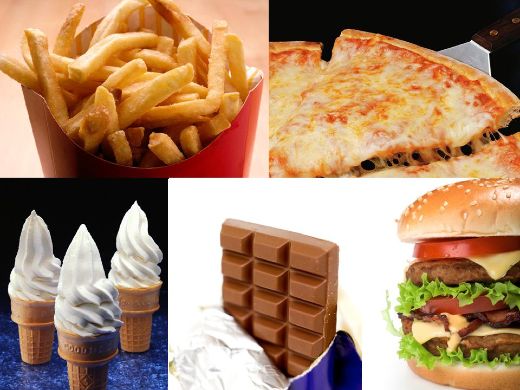
"The whole purporse of flexible dieting, is to enjoy a combination of processed foods and wholefoods aka "clean" foods, with a small portion of your calories coming from the demonised processed foods."
It's simple - keep the sanity alive and the overeating at bay by consuming a small amount of the processed/junk foods you like, in conjunction with wholefoods, to ultimately make your diet and weight loss a success!
One study gave either "whole" or "processed" cheese sandwiches to healthy men and women in a cross over design (16).
The "whole" option had multi-grain bread and cheddar cheese while the "processed" option consisted of white bread and processed cheese.
Meals were the same in terms of protein (15–20%), carbohydrate (40–50%) and fat (33–39%).
WHAT THEY FOUND
In terms of satiety ratings (the feeling of being full) there was NO difference - another study to the mountain of evidence that processed foods won't make you hungrier.
However, the thermogenic effect of the "whole" meal option was 19.9% of the meals energy, while the processed meal was 10.7%.
So again, that's why the majority of your calories will be and should be, wholefood types.
But there's no questioning that processed foods can make their way in there daily, guilt free.
Sure, wholefoods may in some scientific cases (such as above) burn more calories, however the evidence into flexible eating for long term weight loss success far outweighs extra calories burnt in just one meal.
If you're focusing on your daily energy balance (calories in v calories out) and counting macros, then you'll still lose weight, regardless of the rate of thermogenesis one meal might have over another; it's all about staying on track.
You can't get to your destination if your train derails.
BENEFITS OF PROCESSED FOODS
As hard as it is to believe, processed foods carry many health benefits.
For a start, your whey protein powder, which packs a higher biological value than beef, chicken and poultry, is processed (17).
Processed foods contribute to food security (to ensure there's enough for everyone) and to ensure optimal nutrient needs are being met (18).
A recent review into some processed foods found that they can improve "digestibility and bioavailability of nutrients" (19).
Another review into genetically modified organisms (found in many processed foods) declared:
"While genetic engineering of foods continues to generate concern and controversy for some consumers, evidence to date has not indicated that any foods developed for human consumption using genetic engineering techniques pose risks greater than foods produced using traditional methods."
The same review speaks of GMO's ability to induce "improved nutritional qualities" (20).
Depending on the processed food type, there's pros and cons - but it's not all a dark and stormy rain cloud.
They simply can't be pigeonholed like that.
Again, no one is saying to consume a diet completely of processed foods.
CONCLUSION
It all comes down to one word: moderation.
With a moderate amount of processed foods finding their way into your daily diet (about 20-30%), there's enough evidence to suggest this shouldn't cause any problems at all.
It's about preventing binge eating, keeping leptin levels high and not depriving yourself of good food.
Why can't we lose weight and enjoy life at the same time?
And that's the thing.
We can.
"Stay Fit, Stay Flexed!"
STUMBLED ACROSS THIS ARTICLE? BEGIN FROM PART 1 OF THIS SERIES FOR THE WHOLE STORY!
REFERENCES
(10) Kirpitch A, Maryniuk M. The 3 R's of Glycemic Index: Recommendations, Research, and the Real World. Clinical Diabetes. October 2011 vol. 29 no. 4. doi: 10.2337/diaclin.29.4.155.
(11) Kiens B, Richter EA. Types of carbohydrate in an ordinary diet affect insulin action and muscle substrates in humans. Am J Clin Nutr 1996;63:47-53.
(12) Raatz SK, et al. Reduced glycemic index and glycemic load diets do not increase the effects of energy restriction on weight loss and insulin sensitivity in obese men and women. J Nutr. 2005 Oct;135(10):2387-91.
(13) MacLean PS, Bergouignan A, Corier MA, Jackman MR. Biology’s response to dieting: the Impetus for Weight Regain. Am J Physiol Integr Comp Physiol (June 15, 2011)
(14) Smith CF, Williamson DA, Bray GA, Ryan DH. Flexible vs. Rigid dieting strategies: relationship with adverse behavioral outcomes. Appetite. 1999 Jun;32(3):295-305.
(15) Meule A, Westenhofer J, Kubler A. Food cravings mediate the relationship between rigid, but not flexible control of eating behaviour and dieting success. Appetite. 2011 Dec;57(3):582-4. doi: 10.1016/j.appet.2011.07.013. Epub 2011 Jul 29.
(16) Postprandial Energy Expenditure in Whole-Food and Processed-Food Meals: Implications for Daily Energy Expenditure. Sadie B. Barr and Jonathan C. Wright in Food & Nutrition Research, Vol. 54; 2010.
(17) "Whey." The Encyclopædia Britannica. 15th ed. 1994.
(18) Weaver CM, et al. Processed foods: contributions to nutrition. Am J Clin Nutr. 2014 Apr 23;99(6):1525-1542.
(19) Van Boekel M, Fogliano V, Pellegrini N, Stanton C, Scholz G, Lalljie S, Somoza V, Knorr D, Jasti PR, Eisenbrand G. A review on the beneficial aspects of food processing. Mol Nutr Food Res. 2010 Sep;54(9):1215-47.
(20) Winter CK, Gallegos L. Safety of engineered food. Argricultural biotechnology in California series, University of California. Publication 8180.


