
By Dayne Hudson
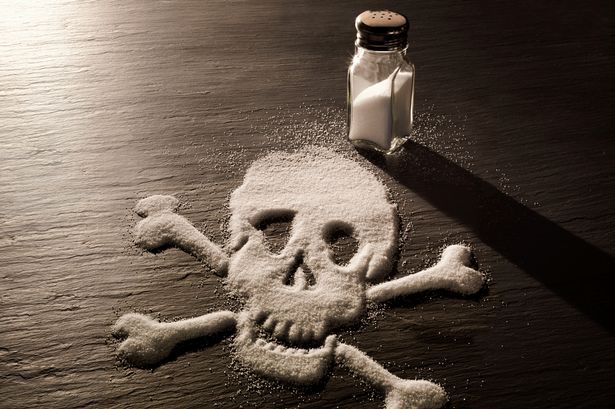
You've most likely heard it countless times: "Don't use the salt it's bad for you!"
But as is the case too often in the world of health and fitness - what's shouted from the roof tops as pure fact, often isn't at all!
So let's take a look at the mineral salt and see if some of the claims have any scientific merit!
SALT AND HIGH BLOOD PRESSURE
A common claim is that salt consumption raises blood pressure which could lead to all kinds of health troubles like heart disease and stroke.
However, a recent study looking at 8670 people found that no association between salt intake and high blood pressure (1).
The study concluded instead that it was body weight that was associated with high blood pressure.
Now of course, those with salt sensitive hypertension should limit salt intake, but for the rest of us, the science is quite eye opening.
The recommendations in Australia is that adults should eat less than 2300 mg of sodium per day, while in America that number is the same, or even lower depending on the organisation (2).
2300 mg is just one teaspoon and 6 grams of salt.
But of course, most people today are eating way more than that; average intake of sodium is around 3400 mg daily (3).
Now is that a problem?
Science doesn't think so.
A massive review into many randomised controlled trials (the Gold Standard of research) found no need for us to reduce our sodium intake in an attempt to reduce heart disease or death (4).
Let's hear from the authors:
"There is still insufficient power to exclude clinically important effects of reduced dietary salt on mortality or cardiovascular morbidity in normotensive or hypertensive populations."
And no, this is not just one study, others have found the same thing (5,6).
So it’s pretty clear that there’s no need to reduce your sodium intake.
And should we really be surprised that what we’re told by authorities contradicts science?
No.
Health authorities are notorious for screwing things up.
In one study that looked at the Dietary Guidelines for Americans Committee's recommendations (7), the authors put forward:
“Lack of supporting evidence limits the value of the proposed recommendations as guidance for consumers or as the basis for public health policy. It is time to reexamine how US dietary guidelines are created and ask whether the current process is still appropriate for our needs.”
THE BENEFITS OF SALT AND WHY TOO LITTLE CAN BE DANGEROUS
Of course, these authorities and other individuals have spent so much time demonising salt, that those who have consumed so little of it have ran into health problems.
In this review (8) diets low in salt were found to increase triglycerides by 5.9%, and increase LDL (the bad cholesterol) by 4.6% - not what the doctor ordered!
Furthermore, sodium is a crucial electrolyte and we MUST have it to function.
It's important for our cell membranes and nerve transmission, along with (wait for it) muscular contraction!
Sodium’s role in the body is important; it’s binds water and maintains intracellular and extracellular fluids in the correct balance.
Now yes, the more sodium we have in our bloodstream the more water it binds, which DOES increase blood pressure, but only to a small degree.
But as you’ve learnt above; studies tell us that attempting to lower blood pressure for better health is uncalled for - and this is the point here (4).
SO HOW MUCH SALT CAN WE HAVE DAILY?
Research (9) into this topic highlights this point: "There in uncertainty regarding the optimal daily intake of sodium..."
However, the above citation suggests this:
"The association between estimated sodium excretion (in short: the sodium you eat) and Cardiovascular events was J-shaped. Compared with baseline sodium excretion of 4 to 5.99 g per day, sodium excretion of greater than 7 g per day was associated with an increased risk of all Cardiovascular events, and a sodium excretion of less than 3 g per day was associated with increased risk of cardiovascular mortality and hospitalization for congestive heart failure."
So there we have it - no more than 7 g of sodium a day and no less than 3!
It's very hard to eat over this amount however, and to do it consistently. But if you're in good health you're most likely within these numbers.
The science seems to steer us into this direction: don’t sit around counting milligrams of salt and stress about lowering your intake. This should only be done if your doctor advises you to do so because of a specific health condition.
We must remember that blood pressure doesn’t kill us directly; it’s not a cause of disease but merely a risk factor.
It’s simple: sprinkle some salt on your food if you enjoy the added flavour, and just watch that the foods you eat daily don’t have excessive amounts of salt!
As the research concluded - don't go higher than 7 grams of sodium a day and any lower than 3 grams!
Cover all of this and you won’t be jeopardising your health.
Science is on YOUR side!
"Stay Fit, Stay Flexed!"
REFERENCES
(1) Lelong H. Relationship Between Nutrition and Blood Pressure: A Cross-Sectional Analysis from the NutriNet-Santé Study, a French Web-based Cohort Study. Am J Hypertens (2014) doi: 10.1093/ajh/hpu164First published online: September 3, 2014.
(2) National Health and Medical Research Council. Nutreitn referenes for Australia and New Zealand: Sodium. https://www.nrv.gov.au/nutrients/sodium
(3) U.S. Department of Agriculture. What we eat in America. Available from www.ars.usda.gov/services/docs.htm?docid=18349.
(4) Taylor RS, Ashton KE, Moxham T, Hooper L, Ebrahim S. Reduced dietary salt for the prevention of cardiovascular disease. Cochrane Database Syst Rev. 2011 Jul 6;(7):CD009217. doi: 10.1002/14651858.CD009217.
(5) Alderman M et al. Dietary sodium intake and mortality: the National Health and Nutrition Examination Survey (NHANES I). Volume 251, no. 9105, p781–785, 14 March 1998
(6) Katarzyna Stolarz-Skrzypek, MD.Fatal and Nonfatal Outcomes, Incidence of Hypertension, and Blood Pressure Changes in Relation to Urinary Sodium Excretion. JAMA. 2011;305(17):1777-1785. doi:10.1001/jama.2011.574.
(7) Hite AH, Feinman RD, Guzman GE, Satin M, Schoenfeld PA, Wood RJ. In the face of contradictory evidence: report of the Dietary Guidelines for Americans Committee. Nutrition. 2010 Oct;26(10):915-24. doi: 10.1016/j.nut.2010.08.012.
(8) Jurgens G, Graudal NA. Effects of low sodium diet versus high sodium diet on blood pressure, renin, aldosterone, catecholamines, cholesterols, and triglyceride. Cochrane Database Syst Rev. 2003;(1):CD004022.
(9) O'Donnell MJ. Urinary Sodium and Potassium Excretion and Risk of Cardiovascular Events. JAMA. 2011;306(20):2229-2238. doi:10.1001/jama.2011.1729.


