
By Dayne Hudson
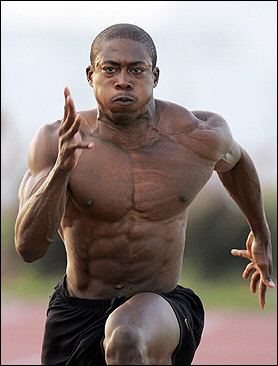
You've heard it so many times before: "Don't do cardio, you'll ruin your muscle gains."
For any man or women - this is NOT good news, given the vital role muscle tissue has for body composition.
However, you can throw this theory into the ever growing pile of FIT'N'FLEXED fitness myths - because cardio is a HELL of a lot more beneficial to your muscle gains then you might think.
THE RESEARCH
One study (1) examined both cardio and strength training together, and found that strength and size CAN be achieved whilst doing both types of training.
It was observed that FREQUENCY and VOLUME was important.
There's no use running for hundreds of kilometres everyday - which is why for years I've been advocating HIGH INTENSITY INTERVAL TRAINING (HIIT) - short bursts which not only lead to fat loss - but muscle growth as well.

HIIT increases the MITOCHONDRIA (2) within your muscles - which is the engine room for ATP (adenosine triphosphate) production.
ATP is the body's high powered energy molecule - so you can see why it's important.
By increasing your mitochondria and subsequently your makeup of ATP - it's almost like increasing the horsepower of a car engine - you'll be able to go HARDER and reach your destination (fitness goals) FASTER!
Take for example the leg press - you can go harder and longer with more adequate ATP - which could lead to more muscle gains.
And it's HIIT training that can achieve this.
FOR A COMPLETE RUN DOWN ON HIIT - CLICK HERE
But that's just the beginning.
The study (1) also found that running, but not cycling, had an impact on gains in strength and size. This is because running is higher impact.

But, if we stick to a HIIT type of training, or the bike for LONGER periods of cardio (NOT HIIT) whilst keeping volume and frequency LOW - then cardio simply WON'T get in the way of our strength and hypertrophy gains.
...AND THERE'S MORE
Further research in 2011 (3) made a lot of "cardio and weights" advocates jump for joy.
Whilst we shouldn't get too carried away as the study was done in rats, the potential outcomes for YOU are still worth smiling about.
The aerobic study (30 minutes of cardio 5 times a week) was found to increase intra-muscular DHT (dihydrotestosterone) conversion.
DHT is a derivative of testosterone and attaches more willingly to androgen receptors for LONGER, meaning it can produce it's anabolic (muscle growth) magic for longer!

Androgen receptors are latched onto by not only testosterone, but DHT and other molecules, to stimulate protein synthesis.
Furthermore, the study found that aerobic exercise increases the activity of the enzyme that converts testostosterone into its more powerful DHT.
The study concluded: "local bioactive androgen metabolism may participate in exercise training-induced skeletal muscular adaptation."
Perfect!
So, if we find that this is translated into human beings, then we can get more of our money's worth from the testostosterone we naturally produce.
And the good news is - research is underway. So far, DHT has been found to increase in OLDER (4) and YOUNGER men (5) after cardiovascular training.
Also, strength gains have been seen in subjects doing both cardio and weights (6), putting an end to that myth.
And in the same research, a superior BMR was found in subjects doing cardio and weights, as opposed to just weights or cardio alone.
Body composition was found to be the BEST in the group performing both forms of training.
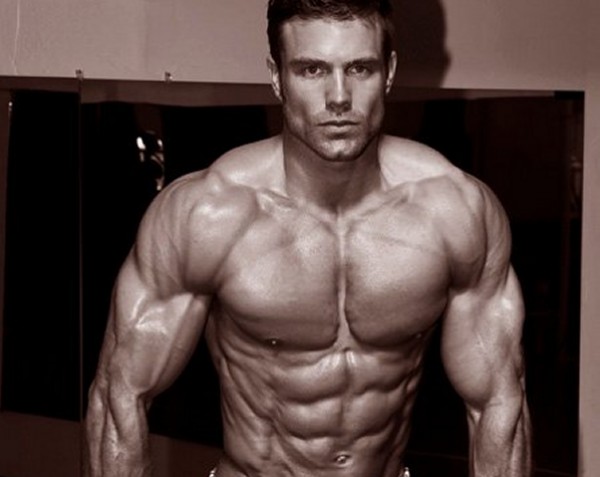
Now obviously this doesn't mean that one can eat well below his or hers TDEE (total daily energy expenditure), run for super long distances, lift weights, and expect to still gain increases in size or strength.
What I'm saying is, that based on the available scientific literature, cardio done correctly WILL NOT hinder muscle/strength gains.
But it will be better for body composition!
...AND THERE'S STILL MORE
So what about the popular question, is cardio better before or after my weight training?
For years, everyone said cardio AFTER weights was better, which made sense.
However, one study (7) blew people away, when it found that weights AFTER cardio, still builds muscle.
I've mentioned this study in the FIT'N'FLEXED newsletter previously - don't miss out on more information like this, subscribe at the top of this page on the right hand side NOW!
But back to the study, the participants did their strength training just 15 minutes after cycling - when their muscles were already fatigued and glycogen depleted. Glycogen is simply stored carbohydrate, so in other words, their tanks were out of fuel.
With one leg, the subjects cycled, then hit the leg extension. But with their other leg, they ONLY performed leg extensions.

Now it's obvious what the researchers were getting at with this study design - to determine which training method (cardio or cardio/resistance exercise) grows more muscle.
Subjects performed 4 sets of 7 reps with everything they had - and the one legged cycling was 70% of their maximal workload at 60RPM for 40 minutes.
Work load was increased until they reached failure. They then rested for 15 minutes, then began their leg extensions.
This went on for 5 weeks, with 3 cardio sessions a week (15 sessions) and the leg extensions alternated from twice a week to THREE times a week for 12 sessions, and ALWAYS after the cycling.
WHAT THEY FOUND
No surprises, after 40 minutes of cardio, peak power in the leg extensions was 10-20% LOWER in the cycling leg in comparison to the leg extension ONLY leg.
So, if you're a powerlifter, and a heavy squat is your goal, obviously cycling before training is not the way forward.
But, funnily enough, both legs increased in power output to a similiar degree at the end of the study!
But here's the most interesting finding....
Hypertrophy was DOUBLED in the cardio/extension leg vs. the leg extension only leg!
A 6% increase in the quadriceps area, compared to 3%.
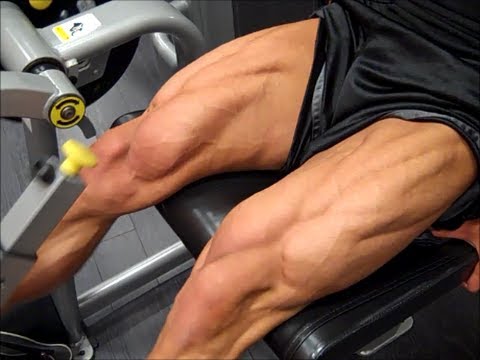
Now let me point out, this study was done in untrained subjects, however, it is still worth noting.
But, the idea that one can perform cardio and then go onto weights and NOT gain muscle, is false.
Now of course, many of you will ALWAYS favour cardio AFTER weights, but the point here is that the old broscience school of thought that cardio BEFORE weights will prevent any muscle growth - is a scientifcally INACCURATE statement.
CONCLUSION
Some people will always perform morning cardio OR weights, and whichever one remains in the afternoon.
However, if you want to perform both together, and do cardio first, then resting adequetly (for 15 mins) afterwards and using a low impact method like the stationary bike, shouldn't cause any problems at all based on the cited literature.
So do cardio correctly - and you'll be on the right path. Just don't go out smashing marathons and expect to be growing muscle as well.

However, whether or not you do cardio BEFORE and or AFTER, isn't really the underlying issue.
What matters is that cardio itself can increase your adenosine triphosphate (ATP) production, and your extremely potent DHT (dihydrotestosterone) - both which can have favourble effects on muscle growth.
Cardio simply won't chew up your muscle if done correctly.
So, the next time someone touts cardio as the evil muscle waster, kindly point them in the right direction!
Stay Fit, Stay Flexed!
REFERENCES
(1) Wilson JM et al. Concurrent training: a meta-analysis examining interference of aerobic and resistance exercises. J strength Cond Res. 2012 Aug;26(8):2293-307. doi: 10.1519/JSC.0b013e31823a3e2d.
(2) Little PL et al. "A practical model of low-voume high-intensity interval training induces mitochondrial biogenesis in human skeletal muscle: potential mechanisms." January 25, 2010, doi:10.1113/jphysiol.2009.181743 The Journal of Physiology.
(3) Aizawa K, Iemitsu M, Maeda S, Mesaki N, Ushida T, Akimoto T. Endurnace exercise training enhances local sex steroidogenesis in skeletal muscle. Med Sci Sports Exer. 2011 Nov;43(11):2072-80. doi: 10.1249/MSS.0b013e31821e9d74.
(4) Hawkins VN. Effect of exercise on serum sex hormones in men: a 12-month randomized clinical trial. Med Sci Sports Exerc. 2008 Feb;40(2):223-33. doi: 10.1249/mss.0b013e31815bbba9.
(5) Smith AA, Toone R, Peacock O, Drawer S, Stokes KA, Cook CJ. Dihydrotestosterone is elevated following sprint exercise in healthy young men. Published online before print. March 7, 2013, doi: 10.1152/japplphysiol.01419.2012. Journal of Applied PhysiologyMay 15, 2013 vol. 114 no. 101435-1440.
(6) Dolezl BA, Potteiger JA. Concurrent resistance and endurance training influence basal metabolic rate in nondieting individuals. Journal of Applied Physiology. August 1, 1998 vol. 85 no. 2. 695-700.
(7) Lundberg TR, Fernandez-Gonzalo R, Gustafsson T, Tesch PA. Aerobic exercise does not compromise muscle hypertrophy response to short-term resistance training. J Appl Physiol (1985). 2013 Jan 1;114(1):81-9. doi: 10.1152/japplphysiol.01013.2012. Epub 2012 Oct 25.


