
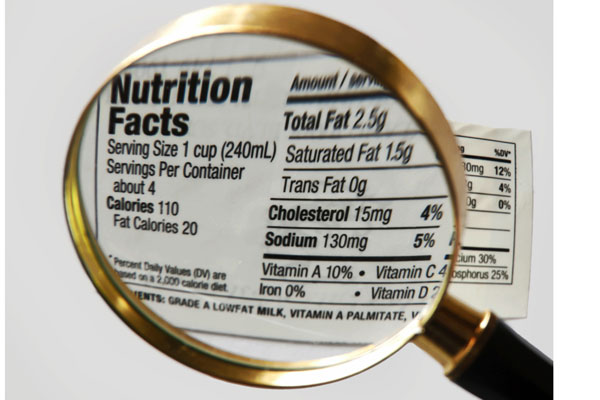
The world of fat loss and calories, although quite simple is still somewhat complex!
You hear me talk about calories in vs calories out, which in it's simple sense is the way forward for either weight loss or muscle gain (and if you really get it right, you can gain muscle with limited fat!)
Put simply (although it kind of isn't) losing those unwanted kilos comes down to energy balance - expending more energy then you're consuming.
THE RESEARCH
Now yes, a calorie is a calorie.
It isn't a bear or anything else!
But it goes a little deeper than just that.
We know that the different macronutrients have a different effect on body composition and our overall weightloss results.
What I mean is, we cannot consume a calorie alone without getting it from either protein, fat, carbohydrates, or alcohol.
Take a look at this below:
PROTEIN: Contains 4 calories per gram, and has a thermogenic effect of 30%
CARBOHYDRATES: Contains 4 calories per gram, and has a thermogenic effect of 5-10%
FAT: Contains 9 calories per gram, and has a thermogenic effect of 2-3%
ALCOHOL: Contains 7 calories per gram (1).
So you can see that there are more calories to the gram with alcohol and fat.
Then there's the other factor - thermogenesis.
Thermogenesis refers to the energy used by your body to digest food.
Protein is the highest with 30% (although it's already accounted for most of the time on the label) and alcohol is a surprising second with a 20-35% thermogenic effect (2).
Taking a look at carbohydrates and fat again above.
You'll notice how we'll lose more calories via thermogensis to carbohydrates than we will fat.
But people seem to forget this and paint carbohydrates and sugar as the bad guys.
...BUT HANG ON A SECOND
Whilst it all seems that straight forward - it isn't.
These numbers are only ROUGH guidelines and it's different for all of us.
Take carbohydrates and fat for example, with research finding that depending on the availabilty of fibre in the diet - further nutrients can be lost (3).
This makes energy calculations inaccurate (3).
PROTEIN
The energy of protein is 5.4 calories, but this is not what is available to the body, as about 1.25 calories is lost "as nitrogenous substances in the urine" (4).
Nutrition labels do take this into account but DO NOT take into account the further rate of the thermogenic effect of feeding (TEF).
So what is then called the metabolisable energy remains, which is appproxiamately 4 calories per gram of protein (8).
Also, further losses happen as small amounts of the nutrients are either not digested or not absorbed and are lost via faeces (4).
Also, fibre has been found to have an effect on protein absorbtion as well.
To quote from the above cited paper:
"When moderate amounts of fibre are introduced into the diet as wholemeal bread, fruit, and vegetables, small reductions in the energy value of all the nutrients occur, amounting to an overall fall of 2–3% in the availability of dietary energy. Further increases in the fibre content of the diet, with fruit and vegetables at the levels consumed by vegetarians, result in an additional 2–3% reduction in available energy".
So what does this mean if you're counting macronutrients in the quest for a bigger/stronger or leaner physique?
Let us bring the authors in again:
"From these findings it is suggested that no extra correction need be made to the energy available from food if the value is calculated from any food composition tables based on the Atwater factors, and if the diet contains only small amounts of fibre. When diets contain moderately large amounts of fibre, derived from fruit, vegetables, and wholemeal bread, values for available energy calculated as above should probably be reduced by about 5%."
Whilst they don't specify what moderate levels or fibre are, I would guess around 20-40 grams might pass as a suitable rough estimate.
THERMOGENESIS AND WEIGHT LOSS
Just this year a very interesting study came out which looked at overfeeding subjects by 800 calories (5).
They overfed them with of whey and casein protein powder - a very lean source of protein.
They were 30 resistance trained subjects with an average lifting experience of almost 9 years.
THE RESULTS
FAT FREE MASS?
NEAT
...SO HOW CAN I BENEFIT FROM THIS IN MY DIET?!
HOW DIFFERENT PEOPLE BURN CALORIES DIFFERENTLY EACH DAY
These people are some of the few of the tribes left, who cover some 24-32 kms everyday chasing a feed.
Let's hear from the authors - and hang onto your hats:
"We found that despite all this physical activity, the number of calories that the Hadza burned per day was indistinguishable from that of typical adults in Europe and the United States....(we) found no difference in daily energy expenditure between the Hadza and their Western counterparts."
How could this be?
Well other findings in the same study discovered the Hadza chew up just as many calories while walking or resting, as Westerners do.
They suggest that the Hadza's bodies have adjusted to their insane levels of activity they need for hunting, by spending less energy in other places.
This is why metabolic calculators (whilst very good at a rough estimate and helping us lose fat) aren't as accurate as some people might think.
But again, what we learn is that whilst figuring out our TDEE and going from there in terms of macro counting, isn't as fool proof as we may think.
However, there's no denying it helps us get lean or put on muscle mass, so you must understand I'm not taking a dig at it - rather just pointing out the complex nature of the human body.
Unfortunetly, it's just not all that simple.
CONCLUSION
Fat loss all comes down to energy balance.
But the factors pertaining to energy balance mentioned above - aren't that straight forward at all!
And that is the point...
However, we can only make do with what we've got...and do the best with what we have.
"Stay Fit, Stay Flexed!"
REFERENCES
(1) Acheson KJ: Influence of autonomic nervous system on nutrient-induced thermogenesis in humans. Nutrition 1993, 9(4):373-80.
(2) Suter PM, Jequier E, Schutz Y. Effect of ethanol on energy expenditure. Am J Physiol. 1994 Apr;266(4 Pt 2):R1204-12.
(3) Johnson I.T, Southgate D.A.T. Energy absorption and dietary fibre. Joint FAO/WHO/UNU Expert Consultation on Energy and Protein Requirements. Rome, 5 to 17 October 1981. A.R.C. Food Research Institute, Norwich, UK
(4) Factors effecting energy and protein requirements. FAU corporate document repository. Agriculture and consumer protection. http://www.fao.org/docrep/003/aa040e/AA040E08.htm
(5) Antonio J, Peacock CA, Ellerbroek A, Fromhoff B, Silver T. The effects of consuming a high protein diet (4.4g/kg/d) on body composition in resistance-trained individuals. J Int Sports Nutr. 2014 May 12;11:19. doi: 10.1186/1550-2783-11-19. eCollection 2014.
(6) Levine A, Eberhardt NL, Jensen MD. Role of nonexercise activity thermogenesis in resistance to fat gain in humans. Science. 1999 Jan 8;283(5399):212-4.
(7) Pontzer H et al. Hunter-gatherer energetics and human obesity. Plos one. July 25, 2012. DOI: 10.1371/journal.pone.0040503
(8) Hall KD et al. Energy balance and its components: implications for body weight regulation. Am J Clin Nutr April 2012 vol. 95no. 4 989-994.
Author

Dayne Hudson