


We've all heard it before.
"Forget about fructose, it's bad for you."
Fructose (and glucose in general as well) has been dealt a bad wrap by lots of health "experts" over the years, who claim it's a deadly and toxic substance.
I've even heard people advise those dieting for a particular event, not to eat fructose, because it will hinder fat loss and cause further weight gain.
So it's time to take a look at the facts whilst answering the all important question: is fructose bad?
FRUCTOSE - WHAT IT IS
Fructose, a simple sugar, is found in fruit, honey and high fructose corn syrup, and is eventually converted into glucose by the liver (1) and used for energy.
Fructose is considered to be the sweetest of the simplest sugars and so for that reason, it's the main ingredient for soft drinks and deserts.

But despite it's awesome taste - there's surprisingly no biological need for it (2).
WHY IT GETS A BAD WRAP
Because high fructose corn syrup is used in soft drinks to sweeten them to the point where it would make Willy Wonka blush - this hasn't done the world of fructose, or fructose foods like fruit for that matter, any good.
FIT'N'FLEXED FAST FACTS
Soft drink consumption has increased unbelievably in the past 6 decades.
In the USA in 1942, the per-person consumption of soft drinks was 90 per year. Fast forward to the year 2000 - and it's 600 servings a year! (3).
Because this has balooned the hell out of obesity statistics, some people have blown this out of proportion to blame fructose (and even fruit!) in general.
But really, it's the soft drinks and the high fructose corn syrup that are doing the damage - not the fructose in the healthier fruit options.
Another concerning statistic reveals more than 50% of preschool children indulge in these soft drinks (4) - which is far too young!
WHAT IS HIGH FRUCTOSE CORN SYRUP?
High fructose corn syrup is any group of corn syrups that have undergone processes to convert their glucose into fructose, in order to created a desired sweetness.
Sugar is expensive in some parts of the world, particularly the United States, so manufacturers turn to high fructose corn syrup because it's not only sweeter, but cheaper!

THE FRUCTOSE RESEARCH
When you have a look at the study designs into fructose - you'll quickly release that just like with everything else, MODERATION is key.
One study (5) revealed that 7 days of a high-fructose diet led to more fat in the liver and muscle, along with decreased insulin sensitivty, which isn't a recipe for a good looking body or optimal health.
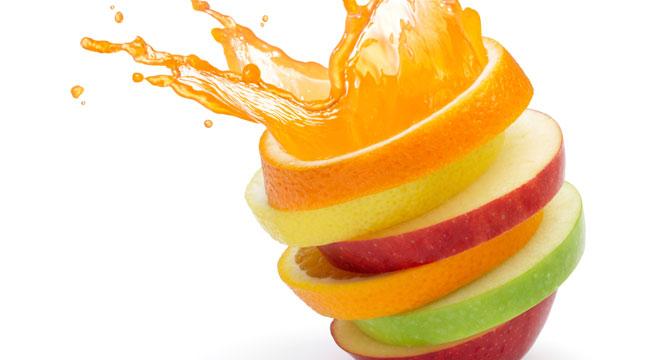
However, the amount of fructose the 16 healthy male subjects consumed in this research was HUGE - 3.5 grams of fructose per kilogram of body weight, every day!
Let's take the average male office worker, who might weight 80 kilos. That's a whopping 280 grams of fructose a day!
So the office worker would need to eat an entire watermelon, or demolish a whopping 40 bananas, or suck down 70 cups of strawberries, to reach that level.
So in the context of FRUIT - you're safe there.
But what about even smaller dosages?
Well, further research (6) had 15 volunteers drink fructose (and glucose) containing beverages that packed 60 grams of fructose, which is the same as eating 9 bananas.
The researchers noted NO blood pressure increases for the glucose beverage group - but reported a rise for 2 hours in the fructose group.
And again - unless you're a monkey, you're most likely not going to eat that many bananas in a day!

However, it didn't stop people from labelling fructose as the bad guy.
A lot of research like this then led to a very reputable and clever meta-analysis (7) from McMaster Univeristy, that addressed the question of whether or not fructose was really responsible for obesity and over weight people in western society.
The authors concluded:
"Fructose does not seem to cause weight gain when it is substituted for other carbohydrates in diets providing similar calories. Free fructose at high doses that provided excess calories modestly increased body weight, an effect that may be due to the extra calories rather than the fructose."
This research suggests that fructose isn't the bad guy - but it's rather the excess calories that are causing the problem.
...OK, SO HOW MUCH FRUCTOSE CAN I HAVE EACH DAY?
According to research (8), 25-40 grams of fructose a day is fine.
That's equivalent to 2-3 apples, 6-10 strawberries, or 3-6 bananas - or a few servings a day as we were always told at school!
A can of coke has about 18 grams of fructose, so if you must drink it, factor that in to your daily allowance.
However - you're MUCH Better to get your fructose from fruit because of the added vitamin and fibre benefits.
CONCLUSION
Fructose is very much a misunderstood sugar, that is perfectly fine in the doses I have recommended.
Just make sure you're not consuming fructose (or anything else for that matter) over your TOTAL DAILY ENERGY EXPENDITURE (TDEE) - the amount of calories you burn everyday.
It's unsafe to consume unlimited amounts of fruit and soft drinks per day, because of the body of research that points towards it being detrimental to body composition and overall health.
Stick to the 25-40 grams guidelines - and you shouldn't have any issues with body composition, or ill health resulting from excess fructose.
"Stay Fit, Stay Flexed!"
REFERENCES
(1) Walberg-Rankin J, Edmonds CE, Gwazdauskas FC. Diet and weight changes of female bodybuilders before and after competition. Int J Sport Nutr 1993;3(1):87-102.
(2) Bray GA. How bad is fructose? The American Journal of Clinical Nutrition. October 2007 vol. 86 no. 4. 895-896.
(3) Vartanian LR, Schwartz MB, Brownell KD. Effects of soft drink consumption on nutrition and health: a systematic review and meta-analysis. Am J Public Health 2007;97:667–75.
(4) Harnack L, Stang J, Story M. Soft drink consumption among US children and adolescents: nutritional consequences. J Am Diet Assoc. 1999;99:436.
(5) Le Ka, Ith M, Kreis R, Faeh D, Bortolotti M, Tran C, Boesch C, Tappy L. Fructose overconsumption causes dyslipidemia and ectopic lipid deposition in healthy subjects with and without a family history of type 2 diabetes. Am j Clin Nutr. 2009 Jun;89(6):1760-5. doi: 10.3945/ajcn.2008.27336. Epub 2009 Apr 29.
(6) Brown CM, Dulloo AG, Yepuri G, Montani JP. Fructose ingestion acutely elevates blood pressure in healthy young humans. Am J physiol Regul Integr Comp Physiol. 2008 Mar;294(3):R730-7. doi: 10.1152/ajpregu.00680.2007. Epub 2008 Jan 16.
(7) Sievenpiper JL et al. Effect of fructose on body weight in controlled feeding trials: a systematic review and meta-analysis. Ann Intern Med. 2012 Feb 21;156(4):291-304. doi: 10.7326/0003-4819-156-4-201202210-00007.
(8) Sanchez-lozada LG, Le M, Segal M, Johnson RJ. How safe is fructose for persons with or without diabetes? Am J CLin Nutr. 2008 Nov;88(5):1189-90.
Author

Dayne Hudson