

I'll cut to the chase to tell you just what you need to know - your sleep is important for your testosterone levels.
The longer you sleep, the longer your testosterone levels will climb (1). More of the hormone is made when you're sleep as opposed to when we you're awake.
But to give you an idea of how much sleep can play a role in testosterone levels; the average man over 40 loses about 1-2% of testosterone a year (2), but still some men in their 80s can have the levels evident in a young man.
In this research the testosterone of 12 healthy and non-smoking men between the ages of 64-74 was measured in the morning (3).
Their sleep was also measured not by guess work - but by a measuring device worn on their wrists. The results of their range of sleeping hours was between 4.5-7.5 hours over 24 hours.
As you'll see below, the longer they slept, the higher their testosterone was, which was to be expected:

The surprising finding was that those who slept the most (around 7 hours plus) had testosterone readings of 500-700 ng/dl, which was nearly TWICE the level of the men who didn't sleep well, and the SAME as you'd expect in healthy young men.
Check out the table below for an idea of testosterone levels depending on your age:

Graph adpated from (4).
You can see how the older men who slept more, woke up with the same amount of testosterone as men as young as 25 are expected to have!
Now this might not mean their testosterone levels will have stayed there all day, but it means it's possible to keep testosterone levels high with adequate sleep, not too much body fat, and weight lifting - all stories for another article another day!
The author concludes:
"These findings suggest that complaints of poor or insufficient sleep in otherwise healthy older men can be associated with a more pronounced age-related androgen decline.....Eliciting such sleep complaints in the physician's office may facilitate the judicious interpretation of lower testosterone levels in the older male patient."
Essentially, the research points towards men looking at testosterone replacement therapy to measure sleep properly first before diving into any treatments, as a lack of it can be a contributing factor to the hormone's decline.
Sleep, Testosterone & Muscle Growth
Testosterone levels within the normal physiological range WILL NOT change your weight muscle growth results, however the data presented in this article is still important to consider as part of your daily life, as you carry on your fitness journey!
"Stay Fit, Stay Flexed!"
Let's get your testosterone levels higher naturally - and get you lean and mean!
I know you're busy, so I won't keep you for long...
My readers regularly message me as losing weight can be extremely difficult.
Even worse is when stopping an extreme diet brings all the weight back!
I have a solution that'll allow you to continue eating the foods you love (in moderation, of course!) but without an extremity such as paleo, no sugar or no carb.
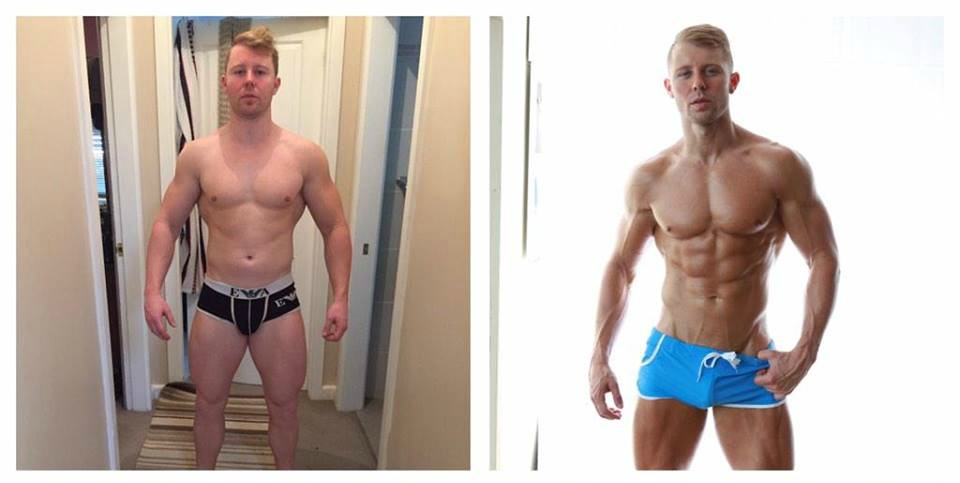
That's me (Dayne Hudson) above. The photo on the left is me at the end of a bulk, and the photo on the right is after dropping off the weight...in just 12 weeks!
I don't believe in short term diets either! I believe in creating a healthy lifestyle, eating the foods you love, and not needing to worry about your diet around the clock!
As a Sports Nutrition Specialist, scientific researcher and valued member of the International Society of Sports Nutrition, I use proven studies to generate results that last for you.
References
(1) Axelsson J, Ingre M, Akerstedt T, Holmback U. Effects of acutely displaced sleep on testosterone. J Clin Endocrinol Metab. 2005 Aug;90(8):4530-5. Epub 2005 May 24.
(2) Travison TG, Araujo AB, O'Donnell AB, Kupelian V, McKinlay JB. A population-level decline in serum testosterone levels in American men. J Clin Endocrinol Metab. 2007 Jan;92(1):196-202. Epub 2006 Oct 24.
(3) Penev PD. Association between sleep and morning testosterone levels in older men. Sleep. 2007 Apr;30(4):427-32.
(4) Vermeulen A. Declining Androgens with Age: An Overview. In Vermeulen, A. & Oddens, & B. J. (Eds.), Androgens and the Aging Male. 3-14.
Author

Dayne Hudson